
Signage and Marking for Electric Utilities
Electric utilities carry a marking burden that few other industries face. Overhead transmission crosses terrain no crew visits for years at a time. Underground distribution runs beneath streets that get excavated constantly. And nearly every piece of equipment in between, from a pad-mount transformer to a pedestal to a meter enclosure, needs to be identified, rated, and marked before anyone opens it.
The consequences of poor marking are immediate. An unmarked underground line becomes a dig-in. A faded high voltage placard becomes an arc flash or shock incident. A substation fence without proper warning becomes a liability claim. OSHA 1910.269, NFPA 70E, and the National Electrical Safety Code all set expectations for how energized equipment and restricted areas must be identified, and those expectations do not relax because a sign has been in the field for eight years.
Vulcan has manufactured signage for electric utilities since 1971. Every product on this page is built to stay legible through UV exposure, temperature swings, wind loading, and chemical contact for the full service life of the asset it marks, not just the first few seasons.
Want to see the products?
Contact UsTransmission Line and Aerial Marking
Transmission corridors are marked for two audiences: crews on the ground who need to locate structures, and pilots overhead who need to see the conductor before they reach it.
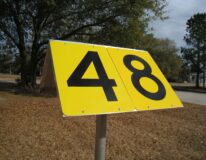
Tower markers identify individual structures by number so line patrols, maintenance crews, and emergency responders can report a precise location instead of a rough description. Numbering that stays readable from a truck at distance shortens response time on every outage call.
Mile markers provide sequential reference along the right of way, which matters most on long rural spans where there are no cross streets or landmarks to reference.
Aerial observation markers are sized and positioned for visibility from the air, supporting line inspection flights and helping identify crossings near airstrips, agricultural spray operations, and low-altitude flight paths. Vulcan's Bent Style Aerial Markers are built for this application, angled for readability from above rather than from the ground.
All three are available with custom numbering, custom character height, and reflective options for low-light conditions.
Vulcan Products for Electrical / Power
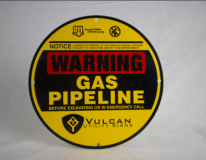


High Voltage, Arc Flash, and Shock Hazard Signs
Warning signage is the last barrier between a worker and an energized conductor. It has to be right, and it has to still be right a decade later.
Vulcan produces the full range of electrical hazard signage:
- High voltage warnings for substations, fenced enclosures, riser poles, and vault access points
- Arc flash labels identifying incident energy, working distance, and required PPE category
- Shock hazard labels noting limited and restricted approach boundaries
- Voltage rating placards stating specific volts for the equipment being marked
- Danger, Warning, and Caution headers matching ANSI Z535 color and format conventions
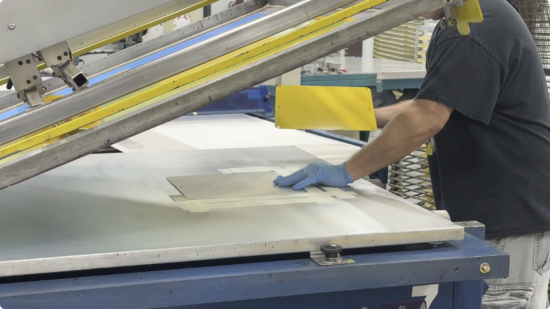
Every sign is printed with outdoor-durable inks and coatings, then QUV tested to confirm the message and color survive prolonged UV exposure. A warning label that has faded to an unreadable gray is not a warning label, and replacing failed signage across a service territory costs far more than specifying the right substrate the first time.

Equipment and Asset Identification
Distribution assets need identification that survives the environment they sit in.
Substation signage covers perimeter warnings, entry restrictions, equipment bay identification, and bus labeling. Aluminum alloy 5052-H38 handles the outdoor exposure and the mechanical handling that fence-mounted signage takes.
Transformer identification covers unit number, kVA rating, voltage, and phase configuration on both pad-mount and pole-mount equipment.
Pedestal markings identify secondary enclosures at street level, where signage takes UV exposure, mower contact, string trimmer damage, and public curiosity. Pedestal decals and plates are built to stay adhered and legible under all of it.
Phase and feed identification matters most when a crew arrives at unfamiliar equipment.
Single phase and three phase designations, along with two-way feed indicators, tell a crew what they are working with before they open a cabinet or a meter enclosure. On a two-way feed, an assumption about which direction is energized is a serious mistake, and clear signage removes the guesswork.
Note: Vulcan focuses on signs, decals, plates, and tags rather than small adhesive labels, so equipment identification here is built on durable substrates, not sticker stock.
Materials Built for the Field
Signage fails in predictable ways: the substrate cracks, the ink fades, the adhesive releases, or the fastener corrodes. Vulcan specifies materials to prevent each one.
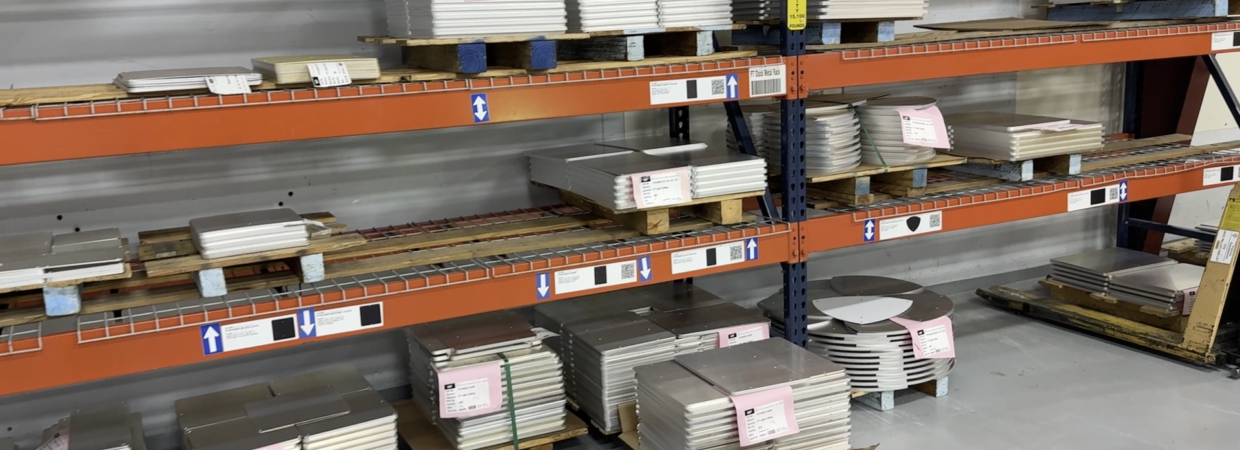
Aluminum alloy 5052-H38 is the standard for permanent signs. It resists corrosion, holds its shape under wind loading, and accepts a durable printed or reflective surface without degrading.
Polycarbonate (commonly known by the Lexan brand name) is stocked for applications where impact resistance and dielectric properties matter more than rigidity. Polycarbonate is non-conductive and resists shattering, which makes it appropriate for signage mounted near energized equipment or in locations where a metal placard is not the right choice. It handles wide temperature swings without becoming brittle.
High-density polyethylene (HDPE) is used for markers that will be struck, mowed over, or flexed and need to return to shape rather than break.
Fiberglass composite is used for drivable and flexible markers where a rigid post would be a liability.
Every material goes through QUV accelerated weathering testing before it ships. That testing is how Vulcan can state service life expectations rather than estimate them.
Customization
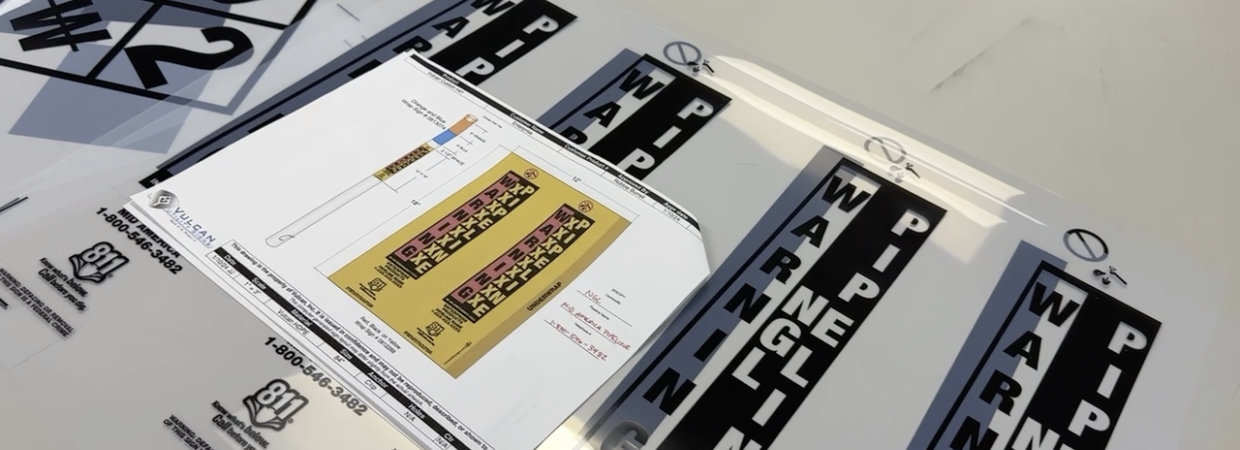
Most electric utilities have their own numbering conventions, color standards, logo requirements, and internal language. Vulcan builds to those specifications rather than asking utilities to adapt to a catalog.
Customization includes:
- Custom text, numbering, and sequential numbering runs
- Company logo and branding
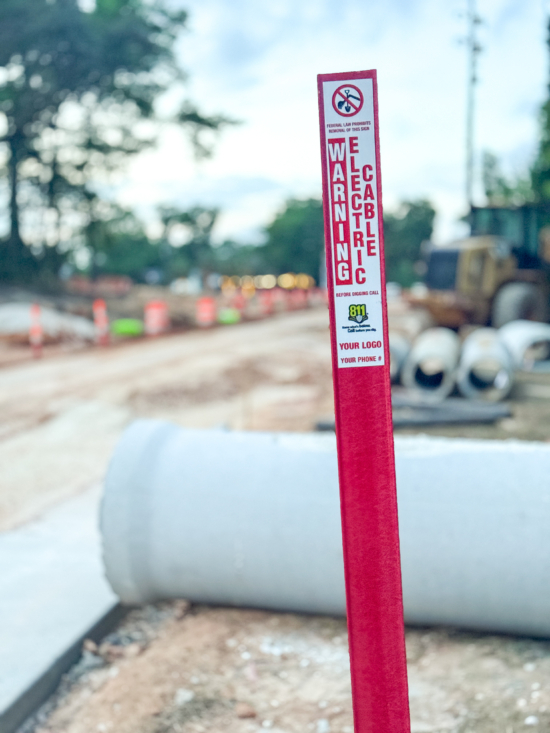
- APWA color coding, including safety red for electric power lines, cables, conduit, and lighting cables
- Specific voltage and equipment ratings
- Size, shape, mounting hole pattern, and substrate selection
- Reflective sheeting grades for night visibility
Talk to someone who knows electric utility signage
Vulcan has been manufacturing utility signage in Foley, Alabama since 1971. If you need tower markers numbered to your convention, arc flash labels matched to your incident energy study, or pedestal and transformer identification that holds up in your territory, we can quote it.
Call 1-800-426-1314 or request information online.